Both Valencia and Barcelona are two of the most beautiful cities in Spain. But if you have to pick just one for your next trip, you’ve probably found yourself wondering: which is the better destination, Valencia or Barcelona?
I’ve been living in Barcelona for several years, and I know Valencia quite well too. So I want to break down “Valencia vs. Barcelona” here, to help you find the perfect destination for your next trip to Spain.
Note: This comparison focuses on Barcelona and Valencia as cities to visit or travel to (though it can also come in handy if you’re planning to move to Spain and need to decide between living in Valencia or Barcelona). That said, I’m leaving the soccer clubs of both cities completely out of this one.
In a Nutshell: Which Is Better, Valencia or Barcelona?
Valencia and Barcelona are both beautiful cities worth traveling to. Both sit on Spain’s Mediterranean coast and offer plenty of culture, great architecture, and delicious food. Barcelona is more touristy and has more attractions, while Valencia is a bit quieter and more affordable.
| Feature/City | Barcelona | Valencia |
| Size | 1.6 million inhabitants on 100 km² (38.6 mi²) | 791,000 inhabitants on 135 km² (52 mi²) |
| Tourism (Visitors in 2024) | approx. 15.5 million | approx. 2.4 million |
| Temperature average | 5 – 28°C (41-82°F) | 5-31°C (41-88°F) |
| Cost of living | about 179 € a day | about 153 € a day |
| Distance to the Sea | Located on the coast | Located on the coast |
| Snow in the winter | rather uncommon | very uncommon |
| Language | Spanish and Catalan | Spanish and Catalan (Valencian) |
| Surroundings | Mountains and sea | Mountains and sea |
| Connection | Good connections to Europe & Spanish cities | Good connections to other Spanish cities |
Visiting Valencia – What to expect in Valencia
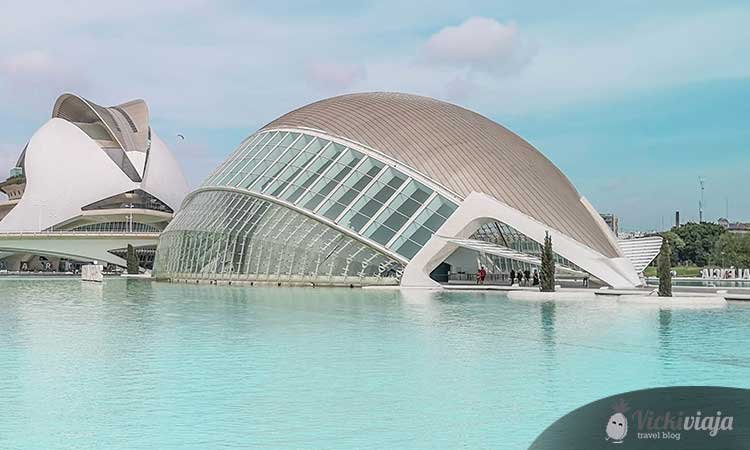
Valencia is a beautiful city full of rich culture and great food. As the birthplace of paella, Valencia is considered by many to be the foodie capital of Spain.
With exceptional facilities like the City of Arts and Sciences, where you can spend an entire day, the city offers everything a modern metropolis should provide. There’s so much to discover here, from distant worlds to underwater creatures.
Valencia is full of history and historic buildings and is more walkable than the Spanish metropolises of Barcelona or Madrid. That also means you can still find a few hidden gems in Valencia that other travelers tend to miss.
Art enthusiasts will find Valencia particularly appealing, with its vibrant street art scene and a broad spectrum of art forms. The city presents a harmonious blend of artistic styles, from traditional to contemporary.
Beach and sea are a big part of Valencia’s appeal, thanks to its coastal location. With miles of coastline at your disposal, there’s a beach to suit every preference here – from tranquil retreats to adrenaline-filled water sports.
Visiting Barcelona – What to expect in Barcelona

Barcelona is one of the most beautiful cities in the world. From Gaudí’s unique designs to the medieval alleys of the Gothic Quarter, Barcelona is simply a photographer’s dream.
Despite the vast amount of sightseeing options, Barcelona’s center is quite walkable. Moreover, Catalan culture and cuisine provide excellent dishes and events daily.
However, Barcelona’s beauty stopped being a secret a long time ago, so you’ll be sharing your trip with plenty of other visitors who want to experience the Catalan capital too.
Barcelona is an international metropolis with no shortage of nightlife and entertainment options. From interesting museums, theaters, and cultural performances to great restaurants, bars, and clubs where you can party until dawn – Barcelona has it all.
Beach time is no problem in Barcelona either. With its location directly on the Mediterranean Sea, the choice is extensive. There is always something going on here, and you have various beaches, beach bars, water sports, and swimming options at your disposal.
Valencia and Barcelona: What they have in common
Now that you have a general idea of the two Spanish cities, let’s take a look at what they have in common.
Location on the Mediterranean Sea
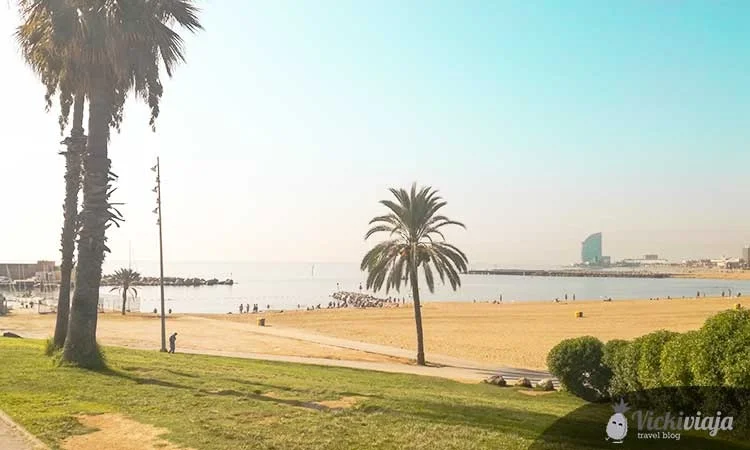
One of the most significant similarities between the two places is that they’re located directly on Spain’s Mediterranean coast. Thus, both destinations are perfect for a beach vacation, either in the city itself or at one of the less visited beaches in the surrounding area.
The Mediterranean coast of Spain is considered one of the most popular regions in the country. So it’s hardly surprising that both Barcelona and Valencia are so popular.
Great climate

Ahh, the weather here really is a dream. I’m typing these lines while my gaze wanders out to a blue sky without a single cloud in sight – just like it’s been all week.
Valencia and Barcelona both offer near-daily sunshine, very little rain, and warm temperatures all year round compared to most other European countries.
Technically speaking, Valencia is a touch warmer than Barcelona overall, thanks to its slightly more southern location (on an annual average, the difference is about 1-2°C / 2-4°F).
That means winters in Valencia are a bit warmer than in Barcelona, but summers can get correspondingly hotter, too.
Not your typical Spanish cities
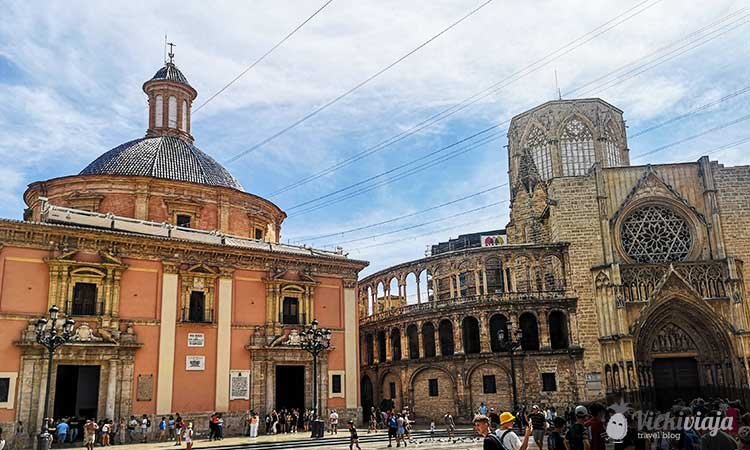
Another characteristic that both Spanish cities have in common is that neither can be labeled a “typical Spanish city.” While other Spanish cities like Madrid or Seville let you fully immerse yourself in an authentic Spanish atmosphere, Barcelona and Valencia are a bit different in that respect.
You’ve probably heard of Catalonia. As the capital of Catalonia, Barcelona stands apart from the rest of Spain in language and culture, among other things.
The same is true for Valencia. Valencian culture has its own quirks too, and uses a different language, Valencian (a dialect of Catalan), alongside Spanish.
UNESCO World Heritage Sites

If you love visiting UNESCO World Heritage Sites, you’re in luck: both Valencia and Barcelona are home to at least one.
In Barcelona, there are nine of them (Sagrada Família, Park Güell, Palau Güell, Casa Batlló, Casa Milà, Casa Vicens, Colònia Güell, the Palau de la Música Catalana, and Recinte Modernista Sant Pau). Not bad at all, right?
Valencia, on the other hand, has only one sight on the list, the city’s old Silk Exchange. But that doesn’t mean Valencia is any less impressive.
Delicious food & drinks

One of the best things about living in Spain is undoubtedly the food. Mediterranean cuisine is healthy and definitely one of the most delicious and varied in the world.
Whichever of the two destinations you choose, you definitely won’t go home hungry. Because Valencia and Barcelona both shine with a vast selection of tasty dishes.
Whether it’s delicious Spanish tapas, typical Spanish dishes, Catalan cuisine, or typical Valencian meals.
Thanks to their similar culture and geographical proximity, the two cities share dishes like paella (though everyone has their own version), fideuà, and arròs negre.
You’ll also find refreshing Spanish drinks in both cities, like the delicious horchata (which actually originated in Valencia) or local wine.
Valencia vs. Barcelona: The differences
I admit that Valencia and Barcelona have a lot in common, especially compared to other Spanish destinations. However, the two also have plenty of far-reaching differences. Below, we’ll take a closer look at these differences between Valencia and Barcelona.
Location
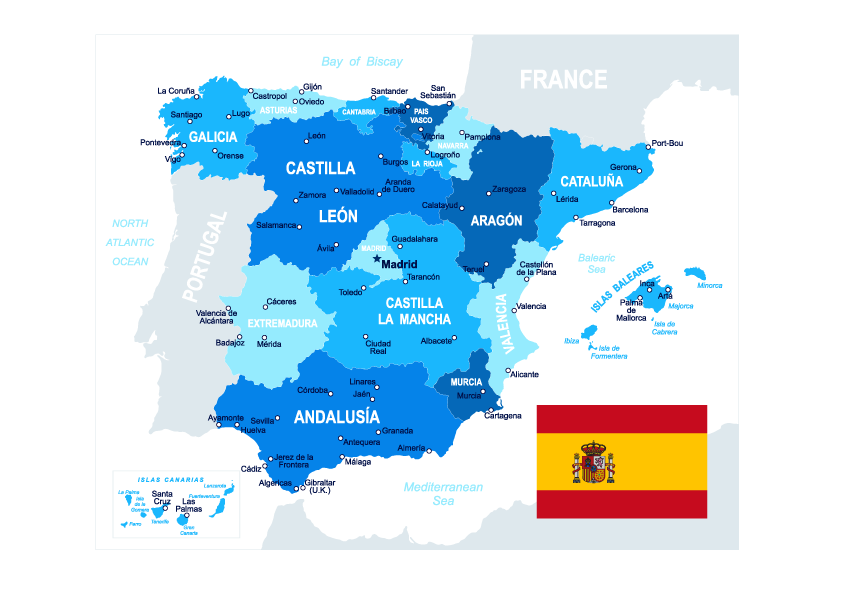
As mentioned, both Barcelona and Valencia sit on Spain’s Mediterranean coast, in the east of the country. Still, their exact locations differ quite a bit.
Barcelona is in Catalonia, in the northeast of the country, while Valencia lies further south along the coast in the Valencian Community – roughly halfway between Barcelona and Alicante.
Size
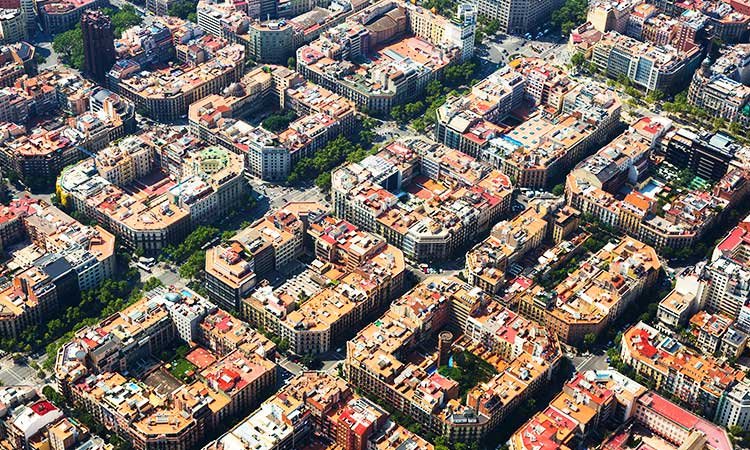
Valencia and Barcelona also differ significantly in size. It might surprise you to learn that Valencia actually covers more area than Barcelona – about 135 km² (52 mi²) compared to Barcelona’s roughly 100 km² (38.6 mi²). And yet, Barcelona is home to almost twice as many people as Valencia (about 1.6 million compared to roughly 800,000).
So it’s no surprise that Barcelona can feel a bit crowded – on top of all those residents packed into a small area, there are usually plenty of tourists too, but more on that in a moment.
Transportation
When it comes to transportation, neither city falls short. Both can be easily reached from other Spanish cities or destinations outside Spain, be it by (high-speed) train, long-distance bus, car, or plane.
Barcelona has three airports in its vicinity, and Valencia has two. Both cities have modern train and bus stations with regular service.
Even within the city, you can get from A to B quickly and easily. Valencia has buses and the streetcar, while Barcelona relies primarily on its well-developed metro and bus network.
Distance & How to Get There: From Barcelona to Valencia
Barcelona and Valencia are about 350 km (217 miles) apart. A lot of travelers wonder if it’s worth a side trip to see both – spoiler: yes, absolutely. Getting from one city to the other is quick and easy, no flight required.
- Train: The fastest and most comfortable option. The high-speed train (AVE, Euromed, or the cheaper Avlo) takes between 2.5 and 3 hours direct from Barcelona Sants to Valencia.
- Long-distance bus: Flixbus or ALSA will get you there in about 4 to 4.5 hours, and tickets are usually a lot cheaper than the train.
- Car: About 3.5 hours via the AP-7 highway. A good option if you want to add a few stops along the way, like the Costa Blanca.
Pro tip: Book your train tickets online and early to get the best prices. If your schedule allows for it, consider combining both cities into one trip instead of choosing just one.
Things to See & Sights
Both cities are full of fantastic sights that could not be any more different. Let’s take a closer look at a few of them.
The Sights of Valencia
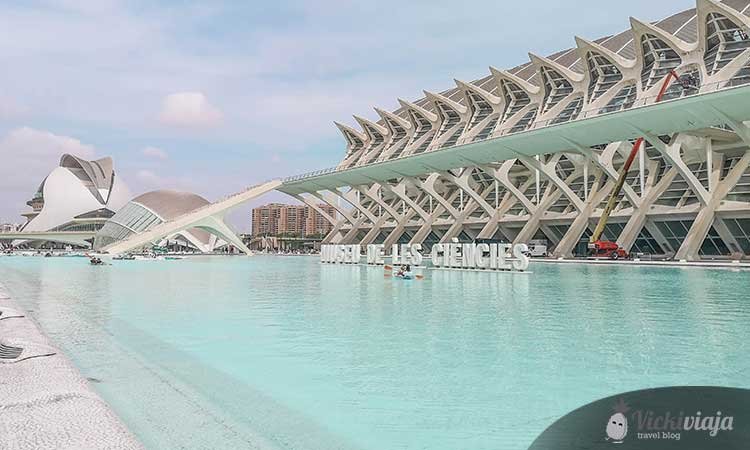
Valencia’s sights are diverse. The historic city center is similar to Barcelona’s, filled with historic buildings and structures. In addition to Valencia’s Cathedral, Basilica, and Central Market, the Silk Exchange stands out as a UNESCO World Heritage Site.
Another important sight in the city, or several sights if you’re taking it literally, is the City of Arts and Sciences. There are all sorts of things to discover and explore. Some of the most popular spots are Valencia’s huge aquarium, El Oceanográfico, and L’Hemisfèric with its IMAX dome.
Of course, the Valencian coast is also an absolute magnet for tourists, with beautiful beaches perfect for an extensive beach vacation – more on that in the next section.
The Sights of Barcelona

Barcelona is packed with attractions. You should spend at least a few days in Barcelona if you want to see them all – and I must say, many of them are absolutely worthwhile.
The nine UNESCO World Heritage Sites alone can easily take up a couple of days in the city. Then there’s also the Gothic Quarter with all its quaint corners and buildings and so many more places worth visiting.
In addition, there are more than 50 museums. And, of course, visiting the beach is also a must. If you are looking for the ultimate sightseeing program, Barcelona is the right place for you.
Beaches
Barcelona and Valencia are both excellent beach destinations, but there are a few differences worth knowing about.
The Beaches of Valencia
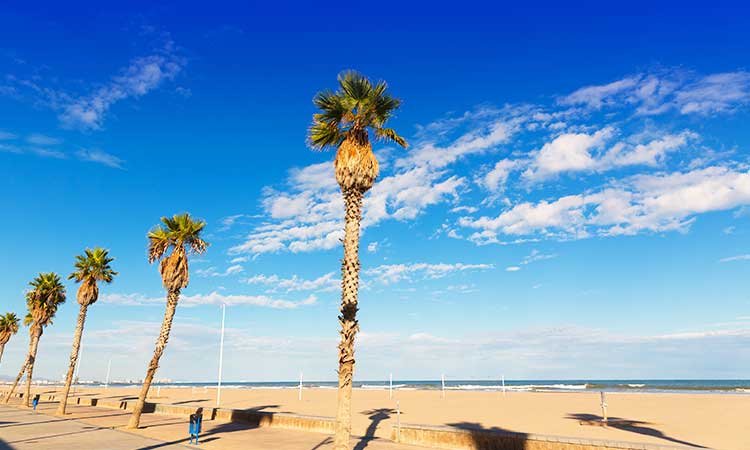
The Comunidad Valenciana is known throughout Spain for its beautiful beaches, and Valencia itself certainly doesn’t fall short either. The city has seven beaches for both locals and visitors.
In addition to small bars and restaurants (chiringuitos), you will find plenty of water sports and activities for young and old.
Also, the beaches directly in the city are mostly clean, and due to their length, you can almost always find a spot – even in summer.
If you travel a bit outside of Valencia, you can visit even more secluded bays that you’ll have almost entirely to yourself.
The Beaches of Barcelona
Barcelona’s city beach makes for a great spot for a walk or a drink by the sea. Unfortunately, it tends to get very, very crowded here, especially during the summer months.
However, if you don’t want to spend your beach day alone, you’ll meet new people super fast – be it playing volleyball or joining one of the other events that take place daily. There is always something going on at the beaches of Barcelona.
Although smoking on the beach is officially banned, you’ll unfortunately still find cigarette butts and plastic waste everywhere. So if you want to stretch out in the sand, it’s best to skip the city beaches and head to one a bit further out instead.
Culture

Both Valencian culture and Catalan culture are full of exciting traditions. Especially on weekends, you can experience a variety of things in both cities – be it dance performances, the Catalan Castellers, or similar events.
Both cities also offer a wide selection of cultural institutions, like museums and theaters.
Language

Both places have a second official language besides Spanish: Catalan. Although the Valencian version of the language is officially called Valencian, it is a dialect of Catalan.
Both places use both languages. My impression is that Catalan is used much more in Barcelona than in Valencia.
Nightlife
Barcelona is known throughout the country, if not the world, for its lively nightlife. There is a huge choice of clubs covering different scenes and music genres, plus bars, restaurants, and all kinds of events.
In keeping with the city’s style, Barcelona’s nightlife is very international and diverse.
Valencia’s nightlife is also well worth checking out. The variety of music genres is a bit smaller than in Barcelona’s, but you can still dance until dawn or check out one of the many bars and clubs.
Tourist Saturation

It’s hard to compare the tourism volume of Barcelona and Valencia. In 2024, Valencia counted around 2.4 million visitors (up 4.5% from 2023), while Barcelona saw roughly 15.5 million visitors that same year.
So the difference becomes apparent immediately. Especially in the summer months, Barcelona is virtually flooded with tourists. The Catalan capital is one of the most visited cities in the world.
In Valencia, things are much quieter. Of course, there are also tourists, especially in the summer months. However, if you prefer to spend your trip without tourist crowds, then Valencia is probably the better choice for you.
Day Trip Destinations Nearby
In my eyes, Catalonia and the Valencian Community are two of the most beautiful regions in Europe (and I’m not just saying that because I live here). You could drive around for weeks or even months and still discover new beautiful places, secluded coves, or exciting sights.
Day Trips from Valencia

There are plenty of great places to discover near Valencia. Among the most popular day trip destinations are the castle of Xàtiva, the Albufera Nature Park, Altea, Alicante, and Benidorm.
Whether it’s countryside, a small town, a beach, or a city trip, you can really find a little bit of everything close to Valencia. And the best thing is that you can easily reach many of the destinations by public transport.
Day Trips from Barcelona
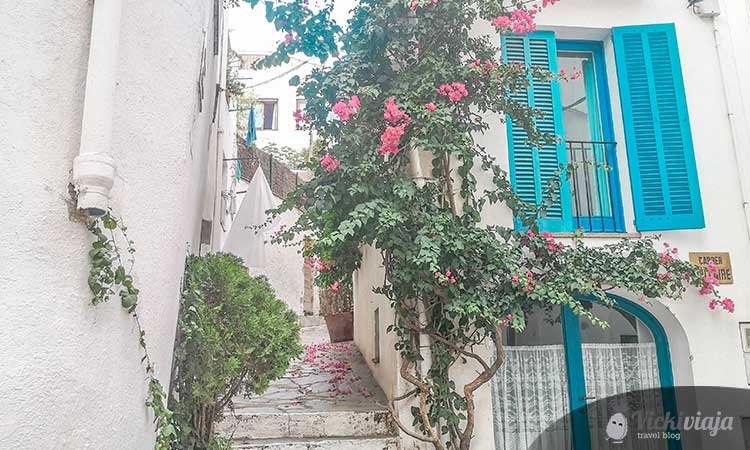
There are also many great places around Barcelona that you can visit on a day trip – ranging from the neighboring town of Sant Cugat del Vallès, to picturesque villages like Cadaqués and Besalù, to the volcanic area of Garrotxa, all the way to the beaches of the Costa Brava and Costa Daurada.
The choice is enormous. Some of the destinations can also be visited by public transport. For other places, however, traveling by car is highly recommended.
Travel Costs
Valencia is generally about 15% cheaper than Barcelona overall – from supermarkets and restaurants to accommodation prices.
As of April 2026, that gap got even bigger: Barcelona raised its tourist tax to as much as €12 per person, per night (for 5-star hotels), while Valencia still doesn’t charge a tourist tax at all.
This doesn’t include entrance fees for sightseeing and tourist activities, though, which can be pretty high in both Spanish cities.
So if cost is an important factor in your decision, this point clearly goes to Valencia.
Shopping
For me personally, shopping on vacation is somewhat secondary. For some, though, a shopping day is an absolute must on every trip, so I wanted to include this point in the comparison anyway.
Both Valencia and Barcelona offer a wide range of stores, local boutiques, large malls with international brands, and of course, plenty of well-known luxury brands.
But if we look more closely at the exact selection in both cities, Barcelona wins this round thanks to its larger selection.
Safety: Is Barcelona or Valencia safer?
One thing upfront: neither city is dangerous, but in both, you should keep an eye on your belongings at all times.
Pickpockets are generally a big problem in Spain due to the lax legislation. The rule of thumb is that the more touristy a place, the more pickpockets. As the most touristy city in Spain, Barcelona has sadly earned the title of pickpocket capital.
That doesn’t mean Valencia is pickpocket-free, though – Barcelona is just unfortunately a bit less safe in that regard than Valencia.
Festivals

Festivals play a significant role in both cities. You can experience various events and festivals throughout the year, whether you visit Barcelona or Valencia.
Some of the most important and popular festivals are:
- Las Fallas Festival in Valencia in March
- Great Valencia Fair in July
- La Tomatina Festival (40 km from Valencia) in August
- Sonar Music Festival in Barcelona in July
- Festa Major de Gràcia in August in Barcelona
- El Mercè in September in Barcelona
Conclusion: Valencia vs. Barcelona Travel
Whether you want to visit Barcelona or Valencia depends on your personal taste and preferences. Both cities are definitely worth a visit. Before we get to the final results, here is a short, direct comparison of both places:
Barcelona or Valencia – Which is better?
Valencia is the right destination for those who prefer it a little quieter and less touristy. The city is also more suitable than Barcelona for a weekend trip or a short stay, because you can see the city’s essential sights in as little as three days.
Valencia is also a bit cheaper than Barcelona, provided you can find a good flight (the choice of flights to Barcelona from international destinations is definitely more extensive).
Barcelona is a good choice if you want to see a lot and don’t mind other tourists. There is so much to see in Barcelona. It’s also where you’ll find it easier to socialize and meet new people from all over the world.
Vicki’s personal opinion (emphasis is on “personal“): Sightseeing in Valencia is more relaxed than in Barcelona. The city is greener, and there are far fewer tourists around. I would also probably choose Valencia for a beach vacation, as the beaches are cleaner and less crowded than ours in Barcelona.
Still, I think Barcelona is just more beautiful as a city – the mix of different styles and unusual buildings – there’s a new picturesque place waiting for you on seemingly every corner. Valencia is a beautiful city, but Barcelona just has that charm that I found a bit lacking in Valencia.