Sun, beach, tourism, nature, food, and fun, what more could you want? Not every city can tick all those boxes, least of all one whose residents happily call it “La millor terreta del mon” (“the best little corner of the earth”). Today we’re packing our bags and heading to the Levante, or more precisely to Alicante, the heart of the Costa Blanca.
And not just for the fantastic sunshine, but for the sheer range of plans, activities, corners, and beaches you can enjoy while you uncover some of the loveliest secrets and best things to see in Alicante. This city has a lot to offer, as long as you know how, where, and when to go.
That’s exactly why I’m here: to help you get the most out of the city and discover together the best things to do in Alicante.
My name is Andrés. I’ve spent my whole life in Alicante, and I’ll be your guide on this trip through what is, in my opinion, one of the most interesting and varied cities in Spain. And honestly, there’s nothing better than talking about the city you grew up in. I’ve got so much Alicante running through my veins that I think I might be the last Hércules fan left.
Note: This post is part of our “Local Experts” series, where locals introduce their hometown. The following article was written by Andrés, who lives in Alicante and grew up there.
In a Nutshell: The 12 Best Things to See in Alicante
- Castillo de Santa Bárbara
- Tabarca Island
- Playa del Postiguet
- Explanada de España
- Barrio de Santa Cruz
- Basílica de Santa María
- El Palmeral Park
- Playa de San Juan
- MARQ – The Archaeological Museum
- La Serra Grossa
- The Port – Puerto de Alicante
- Castillo de San Fernando
The Best Things to Do in Alicante
Now that you know the different ways to explore the city, and that the sun and beach are permanent residents here, you’ll find a whole range of things waiting in its streets. So how about I show you some of the most interesting sights, so you know what’s really worth seeing in Alicante?
Below, I’ll walk you through the city’s main sights, some more famous than others. At the end of each one, I’ll add a personal tip you shouldn’t miss. In Alicante, tourism is part of daily life, and you’re about to see why.
Castillo de Santa Bárbara
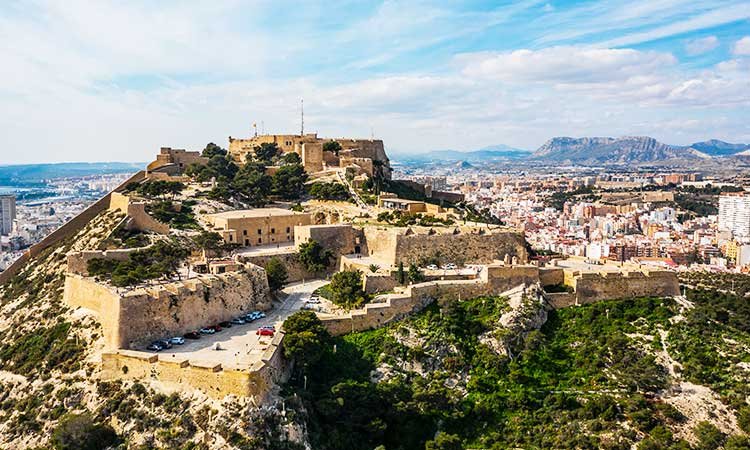
Opening hours: daily from 10:00; closing time varies by season (winter until 18:00, summer 17 June – 4 Sep until 23:00, otherwise until 20:00)
Admission: free (lift: €2.70, free for pensioners and over-65s)
Getting there: The castle sits on Mount Benacantil above Alicante’s port. You can take the lift, whose entrance is on Avenida Juan Bautista Lafora opposite Playa del Postiguet, or go up by car via Calle Vázquez de Mella or on foot.
Legend has it that centuries ago, a great caliph lived in the castle with his family, and his daughter was a princess of unmatched beauty named Cántara. She had no shortage of suitors, but the forbidden love between one of them, Ali, and Cántara turned into an ancient version of Romeo and Juliet.
The ending was so tragic that the caliph, overcome with grief, threw himself from the side of his castle. His death brought mourning to the court, and amazement to everyone when, from the city’s port, they saw a face carved into the rock. This is the famous “Face of the Moor”, and the name is a tribute to the union of Ali and Cántara: Ali-Cántara (Alicante).
Either way, Santa Bárbara Castle is one of the largest in Spain. From its many balconies and turrets, you look out over the port, the city, and the sea. Its history takes in British attacks, invasions, and plenty of other feats worth reading up on.
Halfway up to the castle, there’s an entrance to Ereta Park, a spot with a great view over the city and a way down into the Santa Cruz neighbourhood, another corner I’ll show you shortly. And yes, there’s a restaurant there too if you fancy a break.
Tabarca Island
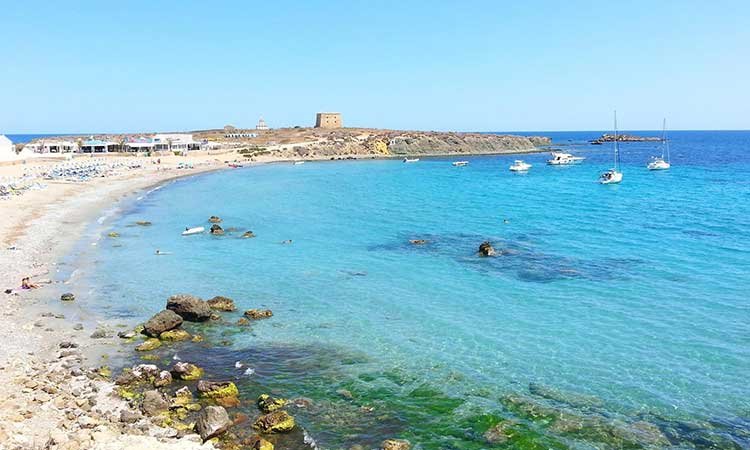
A treasure out at sea: the largest island in the Comunidad Valenciana and the only one that’s currently inhabited. It has a long history in which pirates, looting, and raids play the leading roles.
The island lies about 20 kilometres from the city and can be reached by boat from Alicante’s port and other coastal towns like Santa Pola.
Summer is the best time to visit, though if you can avoid August, all the better. The little coves fill up with tourists and locals making the most of their days off, arriving by boat to spend a day on the beach and enjoy a good rice dish in one of the island’s restaurants.
My tip: look into the companies that rent out small boats. Round up your friends and family and make a day trip of it, without being tied to public transport timetables.
Playa del Postiguet
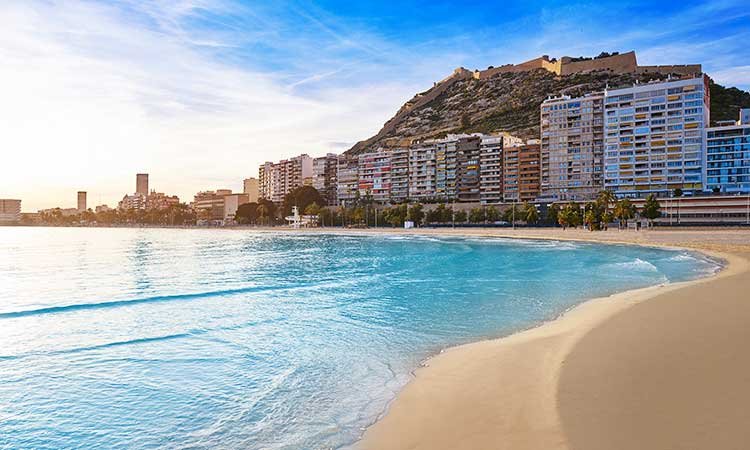
This beach is another of Alicante’s landmarks, just a few metres from the city centre. Being able to pair beach and city like this is something only a handful of Spanish cities can offer, and luckily, on this trip, it’s yours.
Alicante isn’t a big city, so you won’t run into long waits or getting-around headaches. It’s a mid-sized place with the perks of both big cities and small towns.
Postiguet isn’t just the city’s tourist poster child; it’s also an ideal place to spend a day in the sun while getting to know the streets and restaurants nearby. Just know that in the hottest months, you’ll need to get up early to claim a good spot on the sand.
If you have time, start the morning with a walk around the Serra Grossa to watch the sunrise from the top of the city.
Afterwards, you can cool off at Postiguet and finish up at a restaurant like La Taberna del Gourmet, just a few metres from the beach and one of the most popular in the city.
Explanada de España

This is, without a doubt, one of the loveliest and most distinctive places you can visit in Alicante. The Explanada de España is a promenade more than half a kilometre long that runs along a good stretch of the city’s seafront.
Its wave-like design in blue, white, and red, made up of more than 6 million mosaic tiles, has turned it into one of the city’s main symbols and a point of pride for any Alicante local you ask.
It invites you to stroll while the four rows of palm trees flanking each side offer some shade. It starts at the Paseo de Canalejas and ends at the Plaza de la Puerta del Mar, where you get a great view of the port and some of the city’s most distinctive buildings, like the Hotel Gran Sol.
The Explanada is one of the city’s main arteries, perfect for a wander, whether you’re window-shopping, actually shopping, or on your way to Postiguet beach. If you’re passing, be sure to stop at La Terraza del Gourmet and try their Russian salad (“ensaladilla rusa“).
Barrio de Santa Cruz
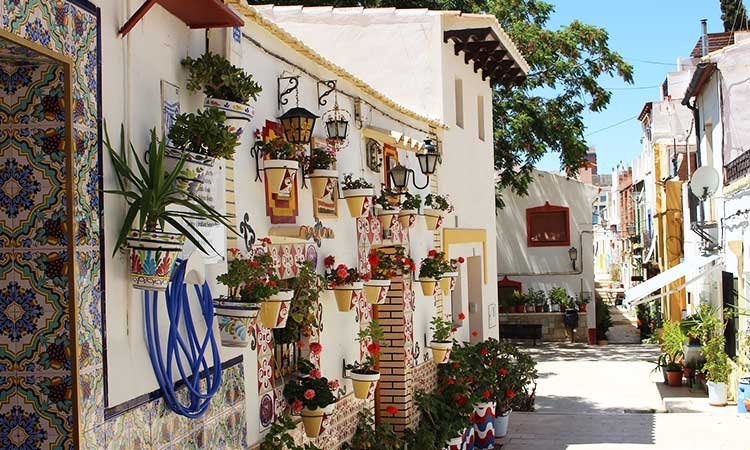
This neighbourhood is right by my old home, so I’ve got no shortage of memories of its lively, whitewashed streets. It’s the real old town of Alicante, sitting at the foot of Santa Bárbara Castle, and it has a charm all of its own.
Santa Cruz is known for its picturesque slopes and flower-covered houses that surprise you at every turn. It’s a pedestrian-only quarter, since the endless steps and slopes make any other way of getting around impossible.
It’s well worth a visit: the bar and restaurant terraces lining the streets are made for lingering over a cold beer. From Santa Bárbara Castle, you can wander down through the streets all the way to the port.
Remember that tip about stopping at Ereta Park? That’s exactly where you drop into the neighbourhood from. And if your visit happens to fall during the Spanish Holy Week, don’t miss the procession that starts in Santa Cruz. It’s genuinely worth seeing.
Basílica de Santa María
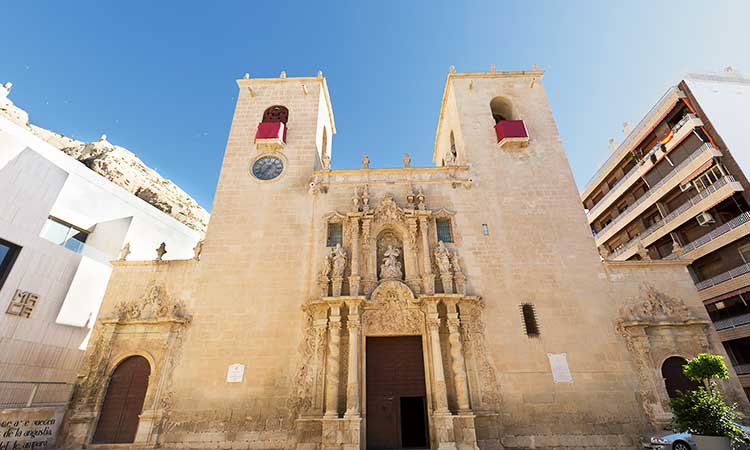
A great starting point for a walk around Alicante is Santa Bárbara Castle, from which you head down through the pretty streets of Santa Cruz. The Basílica de Santa María sits at the end of the neighbourhood, right next to the city hall.
It was built on the site of the city’s former main mosque, begun in the 14th century and finished in the 16th. It saw its fair share of fires, looting, and attacks, but that history is exactly what has shaped the city.
It’s the oldest place of worship in Alicante, which makes it an important part of many of the city’s cultural and tourist routes. You can go in, look around, and take in its Valencian Gothic architecture.
And since it’s so close, it makes sense to combine your tour of the city’s churches with a stop at the Co-Cathedral of San Nicolás, the largest and most beautiful church in Alicante. With a bit of luck, you’ll catch a newly married couple bringing the square to life with their celebrations.
El Palmeral Park

El Palmeral opening hours: 9 am to 11 pm (until midnight in summer)
El Palmeral admission: free
This time we’ll take the car or the bike to reach one of the greenest, prettiest corners of the city. The Palmeral de Alicante is a park in the south of the city where, luckily for the people of Alicante, part of what had originally been destroyed was rebuilt.
The old railway line from Murcia, the metal industry, and the city’s growth had almost wiped out every trace of what this park once was: a wonderful spot with an ideal microclimate for all sorts of plants.
There are no crops left now, but there is the chance to stroll through calm, landscaped areas with waterfalls and lakes.
Getting there doesn’t take long. It’s no more than 15 minutes by bike from the centre, or 5 by car. There are more than 7,000 palm trees and several lakes where you can spend the day with the family.
It’s a perfect place to make the most of your trip and get to know the corners of Alicante that are quieter and less well-known.
Playa de San Juan

For many people, San Juan beach is the perfect place to enjoy the summer. There are recreation areas, a promenade, and a beach so wide and open that it stretches from Alicante all the way to El Campello, another neighbouring town well worth a visit in the summer months.
In winter, all that’s left is the calm of the sea and the sand, where you can walk while taking in the wide views the beach offers. You can even see the skyscrapers of nearby Benidorm.
In summer, San Juan becomes the hub of the city’s social scene. Because even though a lot of locals don’t realise it, the whole of San Juan beach still belongs to the municipality of Alicante. You’ll find beach sports, tournaments, bars, first-rate restaurants, and countless ways to keep yourself busy all day long.
If you’re after some nightlife or an evening drink, there are themed beach bars all along the shore, plus well-known spots like Texaco or Copity by La Seda.
MARQ – The Archaeological Museum
MARQ opening hours: Tue to Sat: 10 am to 7 pm, Sun & public holidays: 10 am to 2 pm, closed Mondays
MARQ admission: €3 (standard), €1.50 (reduced, and on Sundays & public holidays)
The Archaeological Museum of Alicante is another great museum you shouldn’t miss on your visit, especially if you want to add a bit of culture to the trip. This is one of the best archaeological museums in Europe.
The building alone is impressive. Its size and the garden inside make you wonder what it was used for before it became a museum. And since the person writing these lines worked in this building for four years, I can tell you it used to be the provincial hospital of San Juan de Dios. The place is full of history and legends.
The museum has five wings holding treasures, manuscripts, and priceless pieces from different eras, along with three halls devoted to archaeology. Part of the museum is also always set aside for temporary exhibitions from the collections of the world’s leading museums, like the British Museum.
La Serra Grossa

Another of the city’s draws that, luckily for locals, isn’t known to everyone: the Serra Grossa is made up of two hills right next to the city, which connect in the north to the equally well-known Benacantil mountain that’s home to Santa Bárbara Castle.
In the past, there was a small chapel on one of the hills, and you can still find its remains. The real draw, though, is being able to go from an urban to a rural landscape in just a few steps.
It’s the perfect place to start the morning with a good walk. Depending on which route you take, you can admire the northern side with San Juan beach on the horizon, or enjoy a panoramic view over the city when you reach the southern end.
Locals tend to walk up here every few weeks, so along the way, you’ll come across plenty of hikers and all sorts of keen athletes putting their legs through the short but intense climbs.
The Port – Puerto de Alicante
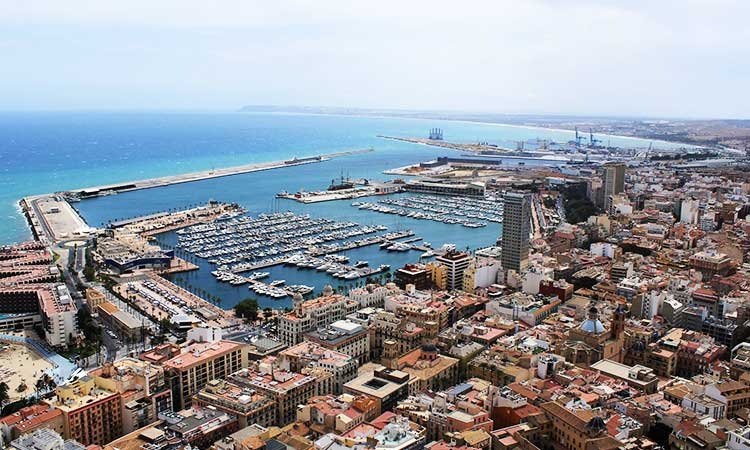
Just a few years ago, the port of Alicante was only really appealing in its most urban part, where you could walk along the single promenade and take in the imposing sight of the huge Meliá hotel and all the ships docking at the various piers.
Since then, Alicante has modernised, improved access, and created a much bigger, more welcoming space. Alongside the hotel, there are a casino, restaurants, cafés, and areas by the docks, where you can enjoy events like The Ocean Race (formerly the Volvo Ocean Race), the big sailing event that has made Alicante a global reference point, since it’s the port every boat sets off from. The race last started here in 2023, and the upcoming 2026/27 edition begins in Alicante once again.
The port also has a continuous waterfront promenade where you can take your best photos, with the Moorish outline of Santa Bárbara Castle rising in the background.
And if you want to enjoy the best rice dish with a sea view, let me point you to Restaurant Dársena. Alicante’s rice has nothing to do with traditional paella, and the city has a whole range of places where you can try every variety of it.
Castillo de San Fernando

And I couldn’t wrap up this little selection of the best places in Alicante without mentioning the city’s other castle, San Fernando. It was built in a hurry to hold off the advance and invasion of French troops during the Peninsular War.
Thanks to its strategic position, the city was better able to defend itself against a French invasion. The troops and the shelling did arrive, but Alicante was spared the castle’s destruction when the French general withdrew to his home country.
Today there’s a café at the highest point of San Fernando Castle. From here you can enjoy the sunset with a beautiful view over the whole city, from a completely different angle than the one Santa Bárbara offers.
Where to Stay in Alicante
Now that you’ve got a list of the must-see places in Alicante, how about we look at the best places to stay? There’s a wide range of options here for every taste and budget. From all of them, I’ve picked out a small selection I think you’ll like:
Suites del Mar, by Meliá

Thanks to its location and the quality of its service, this is one of my favourites. The hotel is part of the Meliá – Porta Maris complex in the port of Alicante. Excellent location, and an even better view. It’s a 4-star hotel with all kinds of amenities and activities that turn your trip to Alicante into a real experience.
Check the latest prices and availability for Suites del Mar
Hotel Hospes Amérigo

We head a few metres into the city centre, where we find one of the best hotels in Alicante. The Hospes Amérigo is your chance to experience Alicante in full. Five stars, with views of Santa Bárbara Castle and the cathedral. The hotel sits right in the middle of Alicante, just a few metres from the city hall.
Check the latest prices and availability for Hotel Hospes Amérigo
Hotel Gran Sol

I’ve already mentioned that this one’s a city icon, so why not take the chance to enjoy those impressive views too? The Hotel Gran Sol is in the city centre, directly opposite the Explanada de España. It’s also part of the Meliá group, and its 4 stars are more than enough to enjoy the fantastic restaurant on the 26th floor.
Even if you’re not staying at the hotel, I’d recommend setting aside a morning to visit the restaurant and try it out. There’s no other spot with a view quite as good, or as high up, as this one.
Check the latest prices and availability for Hotel Gran Sol
Good to Know About Alicante
Before you pack your bags and head off to the airport, it helps to know a few things: the weather, what there is to do in each season, and how the public transport works.
Personal taste aside, Alicante is a city that’s absolutely worth a visit once you know where to go. Like anywhere, it has its contrasts, some charming and some less so, but overall it remains one of Spain’s favourite spots for tourism.
Getting to Alicante
Depending on where you’re coming from, you can choose between several ways to get to Alicante. Luckily, the city is well connected by just about everything, from plane to boat.
Just a few kilometres away is Alicante-Elche Miguel Hernández Airport, one of the largest in Spain and only a ten-minute drive from the centre. And thanks to the road and motorway network around it, the city is easy to reach from anywhere in Spain.
The Best Time to Visit Alicante
Like other coastal cities such as Valencia, Barcelona, and Málaga, Alicante is built to show its best side in summer, when you spend your days on the beach and wind down your evenings on one of its many terraces.
In summer, the city takes on a completely different colour, multiplying what’s on offer and letting you enjoy it to the fullest, as do the tens of thousands of people who come here every year.
But if heat isn’t your thing, Alicante is just as good at any other time of year. The winters are mild, and the sun almost always shows up.
Getting Around Alicante
Over the past ten years, the city has adapted to the different mobility needs of its residents and the tourism it welcomes year after year. These days, you can easily rent a bike and ride through the port or down to the beach.
The public bus is still a handy way to get around, but there’s now a tram network running right through the middle of the city too. So you can go from the sand to the main streets in just five minutes.
FAQ About Your Trip to Alicante
And now that you’ve got everything you need to pack your bags and set off for “la millor terreta del mon”, here are some of the most common questions about what to see in Alicante, what the city is like, and what you should know before you go.
You can explore the city of Alicante in one or two days, but really enjoying the beaches and sights can take a little longer. If your schedule allows, plan for at least three days.
That depends on the neighbourhoods and areas you move through. It’s an absolutely safe city overall, but as in any Spanish city, there are certain areas best avoided to keep any risk as low as possible.
Alicante isn’t really expensive. The upside of such a touristy spot is that you can find activities and offers for every budget. The restaurants aren’t too pricey, so you can enjoy good food and various Spanish rice dishes.
In the city of Alicante, hardly anyone speaks Valencian, so it won’t be a problem at all. Otherwise, essentially all residents speak Spanish too.
And if you already know Alicante or want to share your memories of it with us, why not leave a few travel tips below? Alicante is a beautiful city that deserves a visit, and the more we share, the better for future travellers.