There’s never a bad day to visit one of the most important cities on Spain’s Mediterranean coast. Valencia sits right on its namesake gulf, and it’s one of the most culturally rich regions in the country. But what are the best things to do in Valencia, really?
When you hear the name Valencia, plenty of images probably already come to mind. This city has something new to discover every single day. Let’s walk through its most iconic spots together, so you get a real feel for what to do on your next trip and which Valencia attractions are actually worth your time.
My name is Alberto, and I’m originally from this wonderful city on the eastern edge of the Iberian Peninsula. Today, I’ll show you how to walk through its old and new streets the way a true Valencian would. So let’s skip the small talk and get straight into the best things to see and do in Valencia!
Note: This post is part of our “Local Experts” series, where locals introduce you to their hometown. The following article was written by Alberto, who has lived in Valencia since childhood.
The 28 Best Things to Do in Valencia
VALENCIA INFOBOX
Where to stay in Valencia: Hotel Venecia Centro (a popular 2-star hotel in the center) or Art&Flats B&B (a centrally located budget option with great value for money).
The most popular activities & tours in Valencia
Walking Tour to Valencia’s main sights
Valencia Tourist Card; Transport, museums, monuments, and many sights free of charge.
Getting there: Make sure to check for the best flight deals on Flight comparisons like Skyscanner
Transport: You can get around by metro, bus, or Valenbisi
Want to rent a car? You can find great deals on RentalCars.
Valencia Must-Have: Practical Spanish Travel Dictionary and Valencia-Guide
1. The City of Arts and Sciences – Ciutat de les Arts i les Ciències
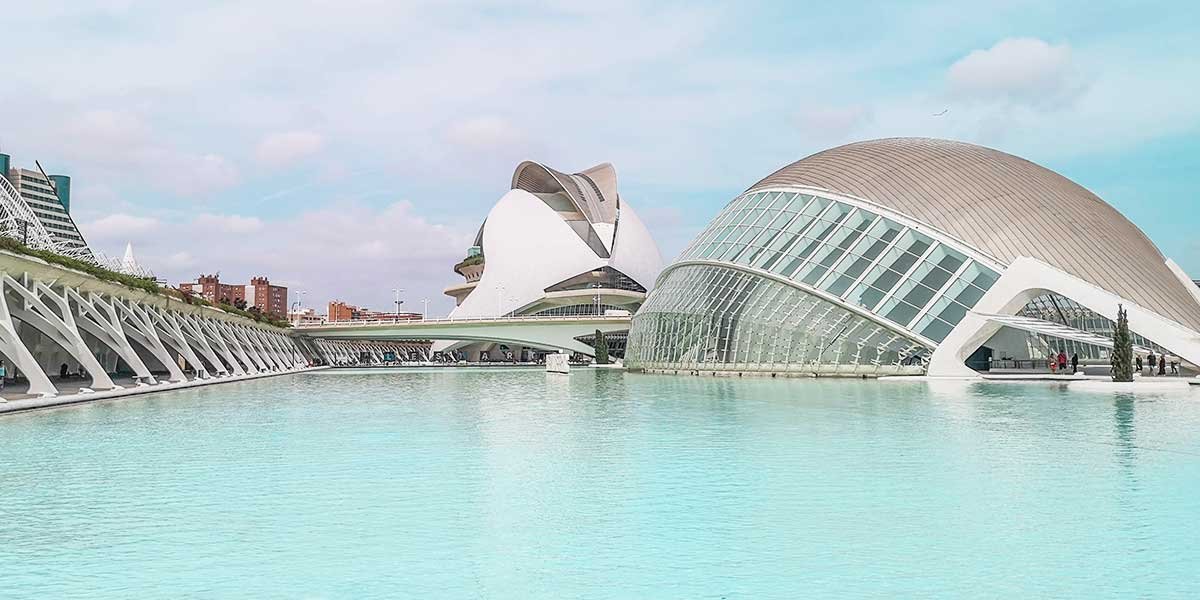
We’re kicking off this list of things to do in Valencia with the largest architectural complex in Spain. The City of Arts and Sciences is a tourism icon in Valencia and an absolute must on your trip.
If your schedule allows it, I’d block off a full day to explore this incredible complex — its striking buildings will make you feel like you’ve stepped into a futuristic world.
The City of Arts and Sciences is made up of seven separate building complexes, and every single one is worth seeing.
El Oceanográfico

Oceanogràfic hours: Sun – Mon: 10am – 6pm; Sat: 10am – 8pm (extended hours in parts of summer)
Oceanogràfic admission: from €31
Oceanogràfic tickets: on-site or online, e.g. via GetYourGuide
Don’t skip a visit to the largest oceanographic park in Europe, spanning 110,000 m². Inside, you’ll find more than 45,000 animals from around 600 different species, including seals, penguins, turtles, rays, sharks, crocodiles, and the kings of the aquarium: dolphins, which put on a show daily at 11:45am and 4pm.
The oceanographic park also offers a long list of activities and one-of-a-kind experiences beyond the main exhibits.
L’Hemisfèric
L’Hemisfèric hours: 10am – 7pm
L’Hemisfèric admission: from €8.90
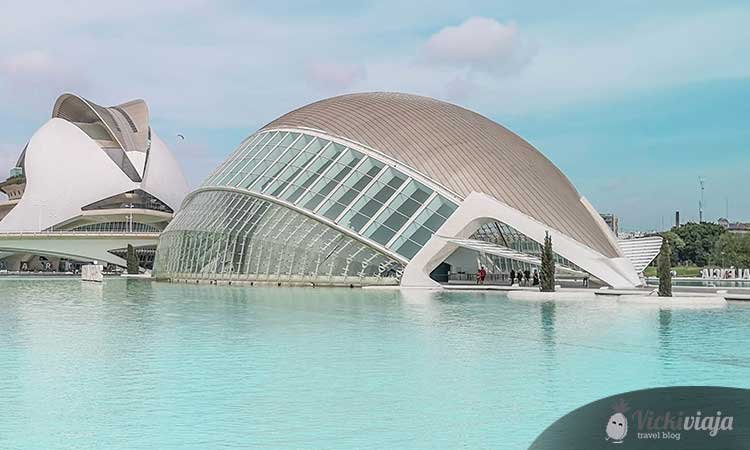
L’Hemisfèric was the first building completed at the City of Arts and Sciences, back in 1998. It’s shaped like an eye and houses one of the largest audiovisual theaters in the country.
Inside its 3D and IMAX dome cinema, you can catch an incredible audiovisual experience, whether that’s a documentary on dinosaurs or a tour through the planets of our solar system.
Museo de las Ciencias – Valencia’s Science Museum
Museum hours: 10am – 6pm (until 7pm/9pm in summer)
Museum admission: from €9
Museum tickets: on-site or online, e.g. via GetYourGuide
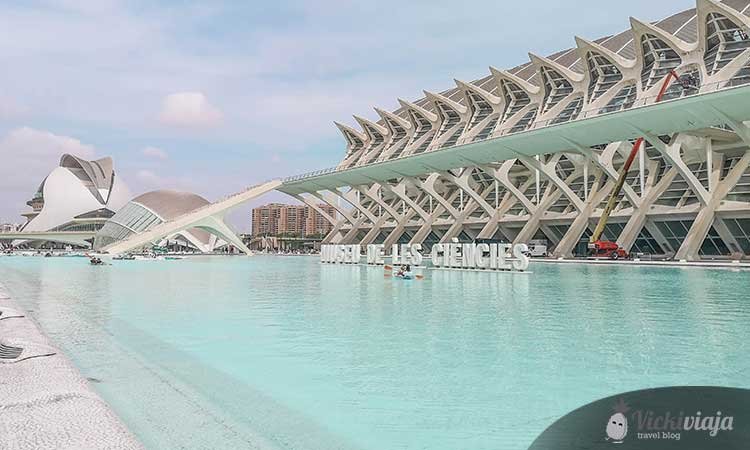
Valencia’s science museum has found a fresh way to teach science and history. Thanks to interactive exhibits built for both kids and adults, you can learn something new while having fun and exploring the world of science and technology hands-on.
El Palacio de las Artes Reina Sofía

Palace of the Arts hours: Mon – Sat: 10:30am – 2:30pm & 3:30pm – 6:30pm; Sun & holidays: 10:30am – 2:30pm
Palace of the Arts admission: depends on the performance and seat: €8 – €145 (find exact prices and the current program on the official website here).
The Reina Sofía Palace is another fantastic sight in Valencia. It doesn’t just host art exhibitions — you’ll also find all kinds of live performances here. It’s also Valencia’s opera house and home to the orchestra of the Valencian Community.
CaixaForum Valencia

CaixaForum Valencia hours: 10am – 8pm
CaixaForum Valencia admission: €6
This blue building is CaixaForum Valencia. If you’ve spent any time in Spain before, you’ve probably come across Caixa already — it’s one of the country’s biggest banks (think of it like Germany’s Sparkasse, or a large regional bank in the US). CaixaForum runs unique exhibitions in several Spanish cities.
Beyond the rotating exhibitions, the venue regularly hosts events like concerts and conferences. You can check what’s currently on display either at the building itself or on CaixaForum’s website.
2. Plaza de la Virgen
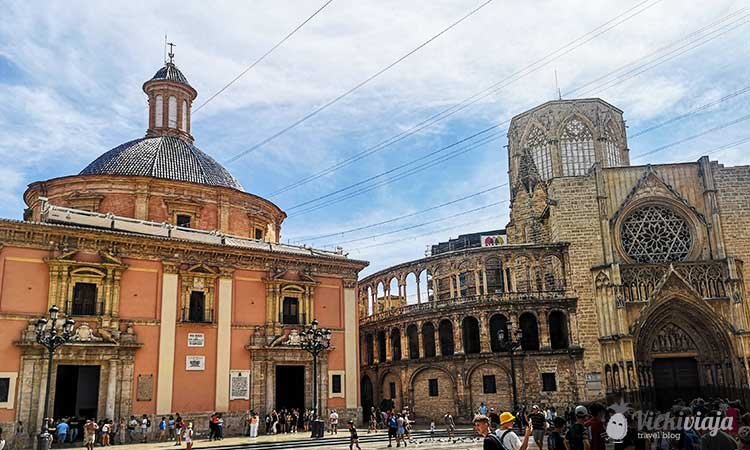
Now that you’ve gotten your fill of culture and science, our tour through Valencia’s old town begins. We’re starting where every Valencian’s plans start: Plaza de la Virgen. This square grew out of an old Roman forum, and today it’s the go-to meeting spot and starting point for tours all across this Mediterranean city.
If you’re looking to join a guided city tour, you’ll find guides waiting right here. The square is framed by major landmarks, including Santa Maria Cathedral, the Basilica of the Virgen de los Desamparados, the Turia Fountain, and the Palacio de la Generalidad.
3. The Turia Fountain – Fuente del Turia
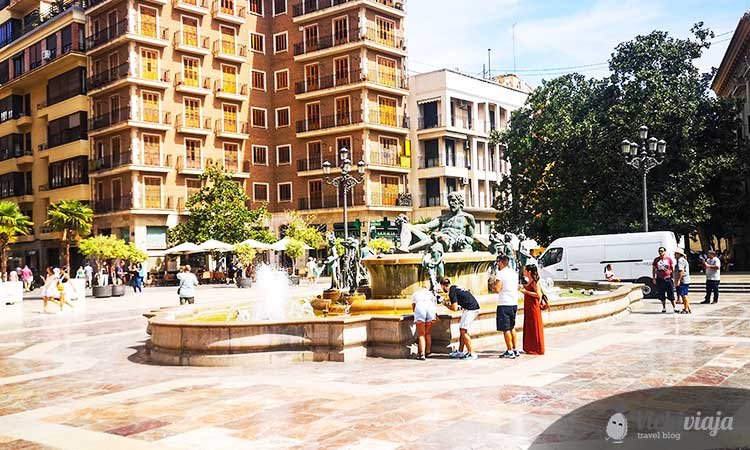
This beautiful fountain in the middle of Plaza de la Virgen is named after Valencia’s most important river, the Turia. The city was originally founded around this river, so it carries a lot of historical weight for us Valencians.
That’s why this fountain was built in its honor — the central figure represents the river itself, while the statues on either side stand for its tributaries.
4. Real Basílica de Nuestra Señora de los Santos Mártires y Desamparados

Basilica hours: 7am – 2pm; 4:30pm – 9pm
Basilica admission: free
Now that we’ve covered Plaza de la Virgen and the Turia Fountain, let’s focus on one of the most striking buildings on the square: the Real Basílica de Nuestra Señora de los Santos Mártires y Desamparados, the sanctuary of the Virgen de los Desamparados, patron saint of the Valencian Community.
This Baroque-style building has stood since the 16th century and is one of the most important pieces of Valencia’s old town. One curious detail: it has an upper archway connecting it to the cathedral, with a window where the Virgin is lit up at night whenever the basilica is closed.
5. Valencia Cathedral – La Catedral de Valencia
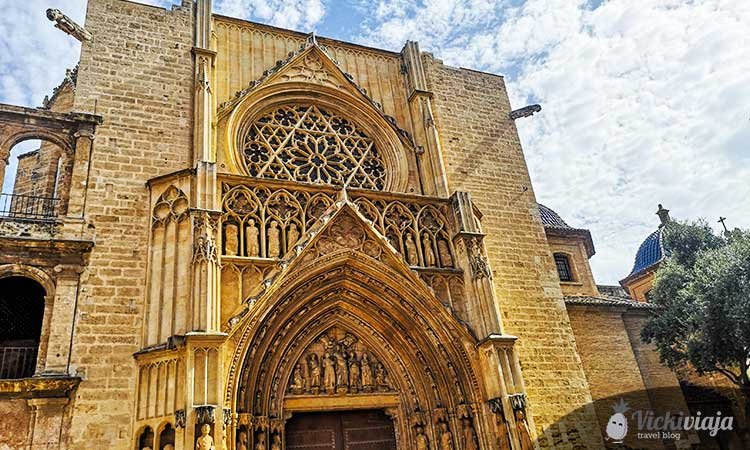
Cathedral hours: Mon–Fri: 10:30am–6:30pm, Sat: 10:30am–5:30pm, Sun: 2pm–5:30pm
Cathedral admission: €12 (audio guide included)
Next stop on our journey is somewhere you really can’t skip as a visitor to Valencia: the Cathedral of Valencia, also known as Santa Maria Cathedral.
It’s predominantly Gothic in style, though you’ll also spot touches of Romanesque, Renaissance, and Baroque influence.
Back in Roman times, a temple dedicated to Jupiter stood on this exact spot. During the Arab invasion, it became a mosque, before finally being converted into a cathedral in the 13th century.
Today, the cathedral is dedicated to the Virgin Mary, and inside you’ll also find the Virgin of the Good Birth. Legend has it that pregnant women should walk around her statue nine times for good luck during childbirth. Interestingly, pregnant visitors with a companion get free entry to the cathedral.
But the cathedral’s biggest draw is the Holy Grail, also known as the Holy Chalice of Valencia. Plenty of visitors come here for this famous religious artifact alone.
6. Plaza de la Reina
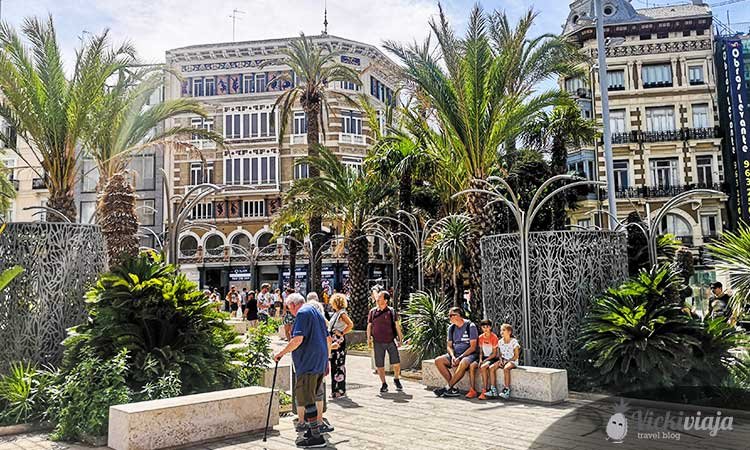
Plaza de la Reina is a historic square and one of the most important in this beautiful city.
It’s surrounded by some of the city’s most popular restaurants and cafés, and it’s also home to one of the oldest and most famous horchaterías in town, Horchatería Santa Catalina. It’s the perfect spot to try Valencia’s most famous drink, horchata, paired with delicious fartons made from the traditional recipe — the flavor combination is unbeatable.
From here, you also have direct access to the El Miguelete tower.
7. Torre El Miguelete
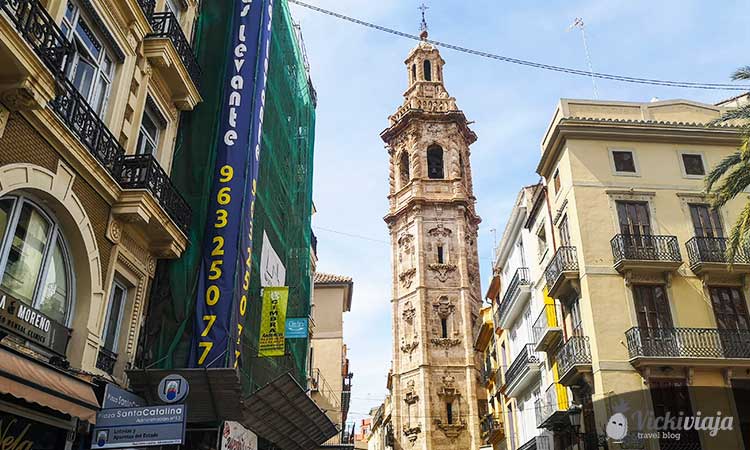
El Miguelete hours: Mon-Sat: 10am-6:30pm, Sun: 10am-1pm + 5pm-7pm
El Miguelete admission: €3 (reduced €2)
El Miguelete is the bell tower of Valencia’s cathedral. Completed in the 15th century, it’s a beautiful Gothic structure standing 63 meters (207 feet) tall.
Stretch your legs and take on the 206 steps to reach the stunning terrace at the top. From up there, you’ll get what’s probably the best view of the old town — and an unforgettable sunset.
8. Lonja de la Seda

Lonja de la Seda hours: Tue – Sat: 10am – 7pm; Sun & holidays: 10am – 2pm
Antiques flea market hours at Lonja de la Seda: Sundays 10am – 1pm
Lonja de la Seda admission: €2 (free on Sundays & holidays)
Our next stop is one of the city’s most important 15th-century buildings: the Lonja de la Seda, or Silk Exchange. For centuries, it played a key role in driving trade for the city.
It was originally meant to be an olive oil market. Over time, more and more goods were traded here, with silk eventually taking center stage and becoming the product that gave the city its name and importance.
The Silk Exchange’s Gothic façade looks almost like a castle, and inside you’ll find one of the most fascinating examples of medieval architecture in all of Spain.
I’d recommend visiting on a Sunday morning. That’s when collectors gather here for an antiques market full of stamps, coins, and all sorts of treasures — a paradise if you’re into collecting.
9. Plaza del Mercado

Plaza del Mercado (Plaça del Mercat in Valencian) is, as the name suggests, the square right in front of Valencia’s central market. From here, you get the best view of the market building in all its glory.
This square is the perfect place to soak up Valencia’s authentic atmosphere. You’ll find plenty of bars and cafés here where locals and visitors alike gather to enjoy the sunny days in this exciting Spanish city.
10. Mercado Central

Mercado Central hours: Mon – Sat: 7:30am – 3pm; closed Sundays
Mercado Central admission: free
After a long morning in Valencia’s historic center, you’ve probably worked up an appetite. That’s exactly why you shouldn’t skip a visit to the city’s most famous market, the Mercat Central. This traditional market is absolutely a must-see in Valencia.
Inside, you’ll find tasty snacks, fresh fruit and vegetables, and everything a good Spanish market should have — meat, cured sausages, spices, olives, and plenty of other local products. One thing you absolutely need to try here is Valencia’s juicy oranges. Grab a freshly squeezed orange juice on your way out to get the full experience.
The market building is worth admiring from the outside too. It was built in the late 1920s and remains a fantastic example of Valencian Modernisme architecture.
I’d recommend not leaving it too late in the morning, since some stalls start closing around 1pm. Set aside one of your mornings to soak in this wonderful spot full of Valencian character.
11. Jardins del Turia

Jardins del Túria hours: 24 hours
Jardins del Túria admission: free
This park winds through a huge stretch of the city, and it’s actually the former riverbed of the Turia.
After devastating floods in the 1950s, city officials decided to reroute the river away from downtown. In its place, they created this wonderful park in the now-dry riverbed, which has since become one of the city’s most beloved features.
A walk through here is an essential part of any Valencia trip. As a green oasis running through the city, it draws locals, visitors, families, joggers, and athletes alike. Whether you’re here to relax or just stroll around, the Turia Gardens are a core part of everyday life for people in this coastal city.
12. Gulliver Park

Hours: Apr – May + Sept: 10am – 8pm; Jul + Aug: 10am – 1pm & 5:30pm – 9pm; Oct – March: 10am – 5:30pm
Admission: free
Getting there: Bus L89, L94, L95. Metrovalencia L3, L7, L9
Across the roughly 10 km (6 miles) of the Turia Gardens, you’ll find everything from soccer and baseball fields to outdoor gym equipment, food spots, and even Gulliver Park.
You’ll find this quirky park between the Angel Custodio and Reino de Valencia bridges. The centerpiece is a massive 70-meter (230-foot) sculpture of Gulliver, straight out of Gulliver’s Travels.
Gulliver’s body doubles as a playground for the youngest visitors to Valencia. Kids can climb through the giant sculpture via stairs, ramps, and slides — basically playing the part of Lilliput’s tiny residents exploring the body of the “giant” Gulliver.
Even if you’re not traveling with kids, it’s still worth a look while you’re exploring Turia Park.
13. Playa del Cabanyal
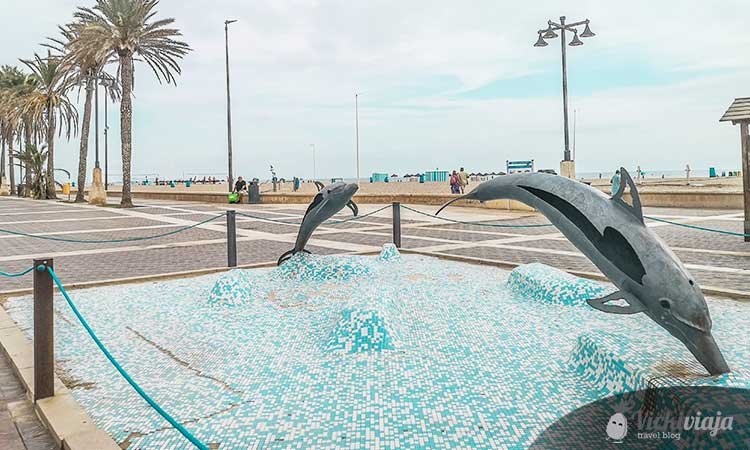
With one of the most beautiful stretches of Spain’s Mediterranean coastline right here, a beach day is a natural part of any trip to Valencia. This beach, one of the must-sees in the city, is especially worth it on a sunny day. Locals often call Cabanyal beach by its other name, Las Arenas.
It’s especially lively in summer, with umbrella rentals, water activities, small beach bars serving cold drinks, and plenty more going on.
But a beach visit is a great idea outside of summer too. During the rest of the year, you can take a long walk along the wide sandy beach and the promenade, and just enjoy the sound of the waves and the quiet.
On top of that, you’ve got the option to grab a table at one of the restaurants with ocean views and try an authentic Valencian paella. Could there be a better plan? I don’t think so…
14. Torres de Quart

Torres de Quart hours: Mon – Sat: 10am – 7pm; Sun & holidays: 10am – 2pm
Torres de Quart admission: €2
The Quart Towers are one of the two surviving defensive gates from Valencia’s medieval city wall.
They get their name from the road they once guarded, which led from the city center at Plaza de la Virgen out to the village of Cuart de Poblet.
These 15th-century towers have been declared a national monument, and on their façade — built in Valencian Gothic style — you can still see the scars left by cannon fire during the Peninsular War, a striking reminder of the early 19th century.
15. Torres de Serranos
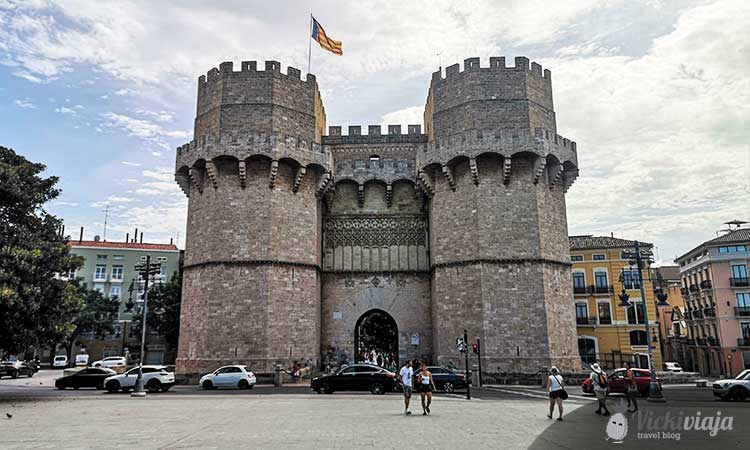
The Serranos Towers sit just north of the old Valencian wall that once surrounded the historic city center.
You can climb these towers for a great view — on one side, the historic city, and on the other, the modern buildings rising up behind the Turia Gardens. It’s a visual contrast that’s genuinely striking.
The towers also host various events throughout the year. The most iconic one is the official kickoff of the Fallas festival — on the last Sunday of February, the Fallera Mayor announces to all Valencians that Fallas season has officially begun. This one-of-a-kind ceremony wraps up with everyone singing the anthem of the Valencian Community.
16. Plaza de Toros

Bullring hours: Tue – Sat: 10am – 7pm; Sun: 10am – 2pm; closed Mondays
Bullring admission: €2
Just a few steps from the central market, you’ll spot the city’s next landmark: Valencia’s bullring, also called Plaza de Toros. With its impressive size — four stories tall — there’s no missing this round building.
This historic building has stood here since the mid-19th century, right next to Valencia’s North Station.
Unfortunately, bullfights are still held here, especially during the city’s festivals — something not every Valencian is on board with, though plenty still follow it passionately.
Vicki’s note: If you’re against bullfighting like I am, I’d recommend just admiring the building from the outside, so you’re not supporting this cruel tradition.
17. Barrio Ruzafa

Station: Autobús L63, L89 y L8. Metrovalecia L1, L2 y L7
Let’s move away from the historic center for a moment and explore a quirky corner of Valencia: the Ruzafa neighborhood, the old Arab quarter.
If you want to escape the crowds for a bit, Ruzafa is the ideal place. A walk through this neighborhood, shaped by its Arab-influenced architecture, feels like stepping into a completely different city. Its old streets and colorful façades make it a genuinely worthwhile stop in Valencia.
Experience Valencian life the way a local does, walking streets where you’ll get to know “the real Valencia.” Ruzafa is especially popular for grabbing a drink, with plenty of bars, cafés, and restaurants waiting for you. It never hurts to end a long sightseeing day in Valencia with a cold beer.
18. Mercado de Ruzafa
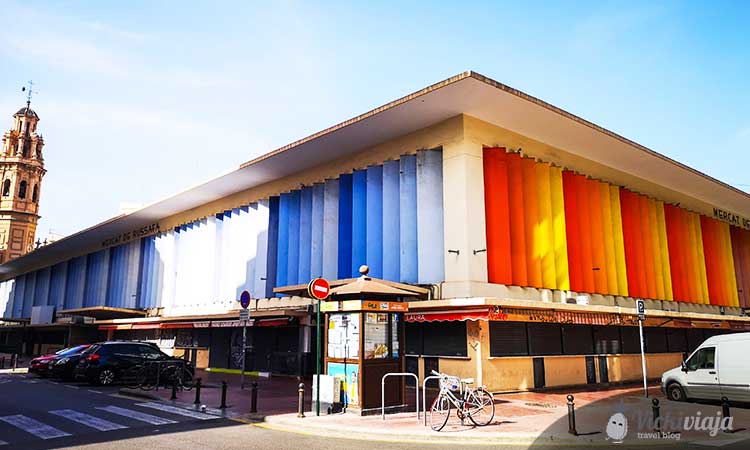
Öffnungszeiten: Mo – Sa: 07.30 – 15 Uhr
Eintrittspreis: kostenfrei
Station: Autobús L6, L14, L15, L35
Now that we’ve covered the Mercado Central, let’s head to the less touristy Mercado de Ruzafa, a market hall right in the Ruzafa neighborhood. The colorful, eye-catching façade of this market hall is worth stopping to admire on its own.
Inside, you’ll find fresh local ingredients like fruit, vegetables, fish, and meat, along with plenty of other quality fresh products.
Even if you show up outside opening hours, don’t hesitate to swing by anyway and take in the market’s colorful architectural details from the outside.
19. El Cabanyal

Now it’s time to explore El Cabanyal, a neighborhood known for its colorful houses and one-of-a-kind atmosphere. Walking through here feels a bit like stepping back into Valencia’s original character.
This historic part of the city used to be its own independent town called Pueblo Nuevo del Mar. Even today, Cabanyal still feels like an old Mediterranean fishing village. It’s a genuine Valencia experience, and one that’s not exactly on the typical tourist trail.
20. Barrio El Carmen
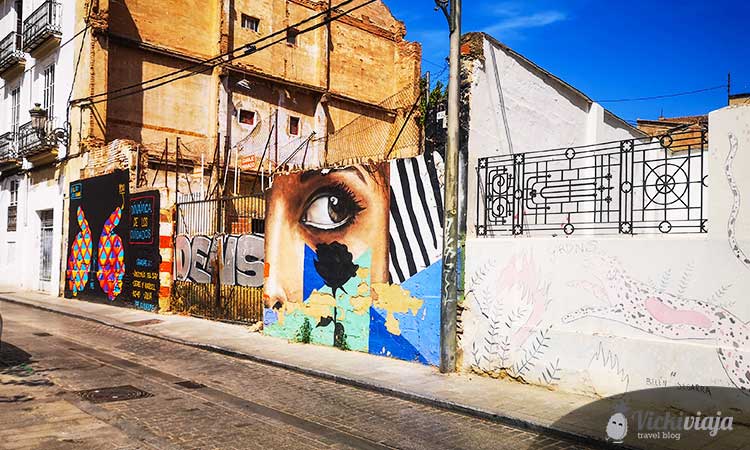
This old part of the city is packed with historically significant buildings, along with plenty of great bars, cafés, and restaurants to discover. No wonder El Carmen is such a popular spot for going out and enjoying Valencia’s nightlife.
The best way to explore this part of Valencia is on foot, wandering street by street and discovering different graffiti around every corner. This neighborhood is known for its street art, and you’ll come across all kinds of work here. Walking through El Carmen feels like strolling through an open-air museum — don’t skip it.
21. Museo de Cerámicas

Hours: Tue – Sat: 10am – 2pm & 4pm – 8pm; Sun & holidays: 10am – 2pm
Admission: Tue – Sat 10am to 2pm: €3. Free the rest of the time
Getting there: Bus L10, L11, 1183. Metrovalencia L3, L7
One of Spain’s most important ceramics museums, the Museo Nacional de Cerámica González Martí, was founded in the mid-20th century. Here, you’ll learn about the history of ceramics and get to see the largest national collection in the country, spanning everything from the 8th century to contemporary pieces, including works by Pablo Picasso.
All of this is housed in the former palace of the Marquis of Dos Aguas. Beyond the ceramics, you’ll also find extensive collections of furniture, clothing, and paintings tracing through Valencia’s history.
22. Jardines Botánicos
Hours: 10am – 6pm (until 9pm in summer)
Admission: €4
If you’re into nature and want to learn more about Valencia’s plant life, this is the spot for you. The botanical garden belongs to the University of Valencia, and you can wander through both indoor and outdoor sections, discovering more than 5,000 different species.
This botanical garden is essentially a living museum dedicated to plant conservation and research. It maintains three different types of plant collections: living plants kept in the outdoor garden, seeds and spores stored in a germplasm bank, and pressed plant specimens in the herbarium.
These days, the garden focuses heavily on preserving rare and endemic Mediterranean plant species. It’s the perfect spot for anyone curious about the natural world. Don’t skip this one if you want to feel like a scientist discovering new species — go get ’em, Darwin!
23. Plaza Redonda – The Round Square

Let’s continue our list of things to do in Valencia with another of the city’s most iconic squares. As the name suggests, it has a circular layout. The square itself isn’t very big, and you can’t miss the striking yellow color of all the buildings surrounding it.
This “Round Square” sits near Plaza de la Reina and was built in 1840. With four entrances, one facing each direction, it’s a really well-connected little courtyard. Slip through one of the narrow entrances and discover this small corner of Valencia, where you can grab a drink or some tapas at one of the bars while watching local life go by.
24. The Fine Arts Museum of Valencia – Museo de Bellas Artes
Hours: Tue-Fri: 10am – 8pm; Sat: 10am – 2pm
Admission: free
Reached the end of your day in Valencia and not sure what to do next? I’ve got you covered: catch one of the incredible shows or concerts at the Fine Arts Museum, then take your time exploring its extensive collections of sculptures, paintings, drawings, decorative arts, and even archaeology.
This museum is considered one of Spain’s most important painting collections, with Velázquez’s self-portrait among its standout pieces. It’s an ideal place to soak up some history, art, and culture during your trip to Valencia.
25. Estadio Mestalla

Important: Mestalla is currently being rebuilt into the “Nou Mestalla,” with reopening planned for summer 2027 at a capacity of around 70,000 seats. You can still visit the stadium in the meantime: the “Mestalla Forever Tour” runs daily (Mon–Sat 10:45am–6:14pm, Sun 10:45am–1:30pm, about 1 hour, offered in Spanish & English, advance booking required). The tour doesn’t run on match days or training days.
Spending the weekend in Valencia? Make the most of it and catch a Valencia CF match at the incredible Mestalla Stadium, one of the biggest and most important stadiums in the country.
This is one of the most exciting events you can experience in Valencia — the fans here are some of the most passionate in the country, cheering their team on with everything they’ve got. Feel like one of the 50,000 fans who pack the stadium for every match.
Once you’ve cheered alongside all the fans, take a walk through the Mestalla neighborhood — a great spot to recharge at a restaurant or tapas bar. And if you’ve still got energy left, this is the neighborhood with the liveliest nightlife around. Time to get dressed up, hit a club, and celebrate a Valencia CF win with a drink.
26. Jardí de Montfort

Hours: Mar – Oct: 10am – 8pm, Nov – Feb: 10am – 6pm
Admission: free
Getting there: Bus L6, L70, L80. Metrovalencia L3, L9
Let’s travel back in time to discover the lovely Jardines de Monforte — a clear example of a 19th-century Valencian garden. These gardens are the work of architect Sebastián Monleón, who designed them in a distinctly Romantic style.
Without a doubt, it’s one of the most beautiful spots in the city — the fountains and statues give the gardens a one-of-a-kind atmosphere, making it one of the most romantic places in Valencia for a walk.
Inside the Monforte gardens, you’ll find unique structures spread across its more than 12,000 square meters. Another fun fact: it’s home to unique species like the Ginkgo biloba, also known as the “tree of forty shields,” which can grow up to 35 meters (115 feet) tall.
27. Biopark Valencia
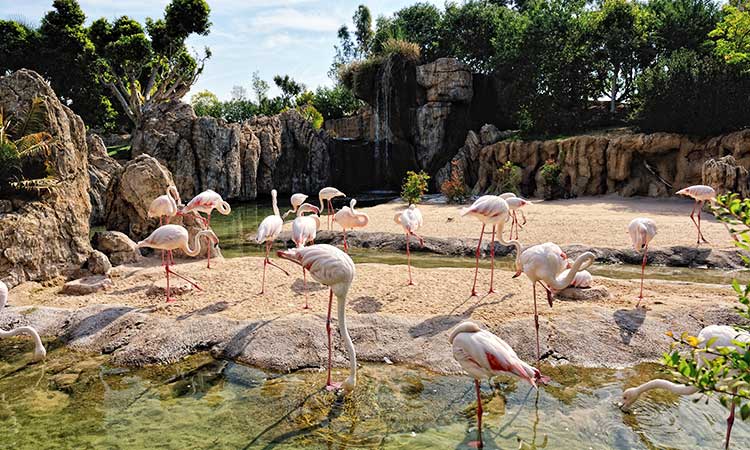
Hours: 10am – 6pm
Admission: from €29.50 (reduced from €23.50)
Head to the western end of the Turia Gardens and you’ll reach Bioparc Valencia, the city’s zoo, which recreates different African ecosystems across more than 100,000 m²: the equatorial forest, the savannas, Madagascar, and the great wetlands.
Bioparc takes animal welfare seriously, recreating the animals’ natural living conditions as closely as possible so they can lead fulfilling, authentic lives.
The park is home to more than 800 animals from 116 different African species, from lions to meerkats and everything in between, including species native to our neighboring continent. You’ll also get to see species that are increasingly rare in the wild due to the threat of extinction.
Time to unleash your inner explorer and dive into this little adventure. It’s the closest you’ll get to an African safari without leaving Spain — a chance to experience the beauty of nature while still respecting the animals.
28. Valencian Cuisine
And of course, no trip is complete without trying the local food. We’re in luck here, because Valencia has one of the most delicious cuisines in all of Spain — from rice dishes to sweet desserts that’ll make the trip even better. Buckle up, because our culinary tour starts now:
Valencian Paella
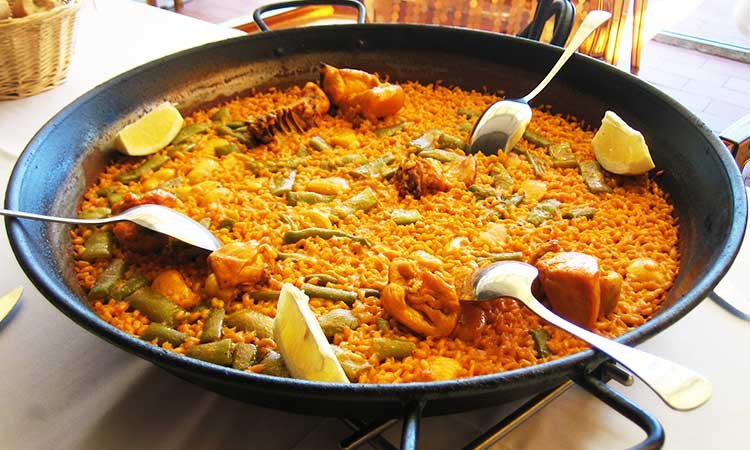
If there’s one thing we Valencians will repeat until the end of time, it’s that the paella served in the rest of Spain is just “arroz con cosas” (rice with stuff in it). Because there’s only one real paella, and it’s the one made right here at home.
If you come to Valencia and skip the paella, it’s almost like you never came at all. You absolutely have to try the original recipe — the one and only traditional paella. The flavor of Valencian paella is unlike anything else, and it’s impossible not to fall in love with it.
El Arroz – Valencian Rice Dishes
If there’s one thing we Valencians love to eat, it’s rice — we really love rice. And the best part is we have so many different rice dishes that you could try a new one every day. Standout dishes include black rice, Arroz a Banda, Arroz con Costra, Arroz al Horno, and Arroz del Senyoret. Each one has its own preparation method and ingredients, perfect for keeping things interesting.
Olla Valenciana – Valencian Stew
If you’re after a hearty meal packed with nutrients, Valencians have just the dish for you: “Olla Valenciana” (Valencian stew).
It’s a richly spiced stew loaded with all kinds of meat — blood sausage, chorizo, beef or pork, white bacon, chicken, or meatballs. Everything simmers together in a rice broth alongside vegetables like potatoes, turnips, celery, and chickpeas.
Pumpkin Fritters – Buñuelos de Calabaza
Another typical Valencian treat is buñuelos de calabaza — delicious sweet pumpkin fritters that are especially popular during festivals like Fallas. This dessert needs to be high on your list during your trip to Valencia.
Horchata de Chufa – Valencia’s Signature Drink
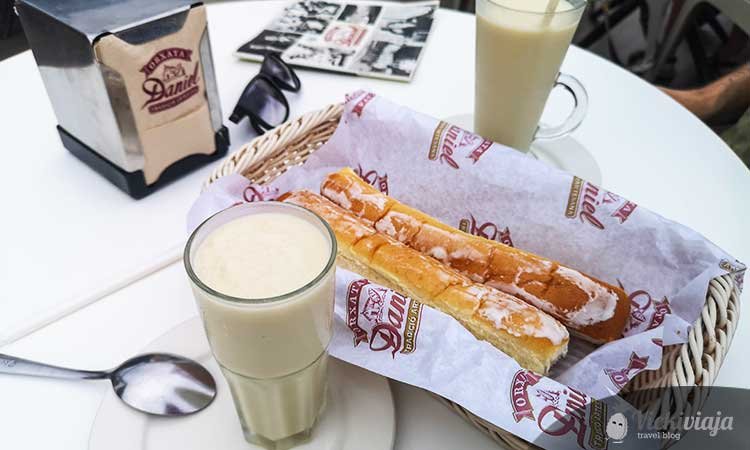
You’ve probably already heard of horchata from Valencia, one of the most popular drinks in this Mediterranean country. It’s sweet, refreshing, and utterly unique. Horchata is a must in summer, though honestly, it’s just as good year-round. And there’s nothing better to pair it with than a few…
Fartons
This sweet treat, which originally comes from the Alboraya region, has had a long tradition in the Valencian Community for centuries. It came about as a solution for finding a sweet that could be dipped right into horchata — hence its long, oblong shape, perfectly suited for soaking up the tiger nut milk.
Wake up, take a stroll through the center of Valencia, and stop at a bar to enjoy this region’s fantastic combination of horchata and fartons.
Getting Around Valencia: Practical Tips
Many of the things to do in Valencia from this list are within walking distance in the old town. For everything else — the beach, Bioparc, Mestalla, and more — bus or metro will get you there quickly and cheaply.
- On Foot: The historic center is very compact — you can comfortably walk to most of the attractions on this list.
- Metrovalencia: The metro and tram network connects the city’s main neighborhoods, plus the airport, to downtown.
- EMT Bus: Covers areas the metro doesn’t reach — handy for spots like Bioparc or the Monforte Gardens.
- Valencia Tourist Card: Worth it if you’re staying multiple days — unlimited bus and metro rides, plus discounts on many of the attractions on this list. Check current pricing on the official site.
Where to Stay in Valencia
The Best Hotel in Valencia
Venecia Plaza Centro

This 2-star hotel is consistently one of the highest-rated options among independent travelers. Venecia Plaza Centro sits right in the historic center on Plaza del Ayuntamiento, just a few minutes’ walk from the city’s main attractions.
Guests consistently praise its great location along with excellent cleanliness and comfort.
See more information, prices, and availability for Venecia Plaza Centro
The Best Budget Accommodation in Valencia
Art&Flats Bed and Breakfast

If you’re after a great place to stay in Valencia’s historic center without breaking the bank, Art&Flats is the spot for you. This B&B offers clean, comfortable rooms, a fantastic location, and friendly service at a great price.
The only downside is that it can be a little tricky to find the first time, since the signage isn’t great. Otherwise, it’s a favorite among budget-conscious travelers.
See more information, prices, and availability for Art&Flats
Didn’t Find the Right Place to Stay?
>> See all accommodations in Valencia on Booking.com
Frequently Asked Questions about Valencia
Valencia is a fairly walkable city, with many attractions close together. We’d recommend spending 2-3 days here.
Valencia is worth visiting any time of year. Winter brings delicious oranges, fewer tourists, and plenty of sun. Spring and fall offer relatively light crowds, great weather, and more comfortable temperatures. Summer means perfect beach weather, but also more visitors.
Compared to other Spanish cities, Valencia isn’t expensive. It’s a bit cheaper than Barcelona and Madrid, and somewhat pricier than Granada and Seville. Compared to cities back in the US, Valencia is on the more affordable side.
Thanks to its prime location, a trip to Valencia pairs easily with plenty of other Spanish cities. Great options include Madrid, Barcelona, Alicante, and Cartagena.
The so-called Holy Chalice of Valencia is kept inside Valencia Cathedral (La Catedral), in the city’s historic center on Plaza de la Virgen.
Valencia was founded all the way back in 138 BC under Roman rule, by consul Decimus Junius Brutus Callaicus, under the name Valentia.
Absolutely. Beyond the beautiful historic center, don’t miss a visit to the City of Arts and Sciences either.
Tipping isn’t mandatory in Spain in general. If you do want to leave something, 5-10% is appropriate.
Valencia is not part of Catalonia. Instead, it’s the capital of its own autonomous region, the Valencian Community.